
Step-by-step guide
How to prepare a two-column cash book
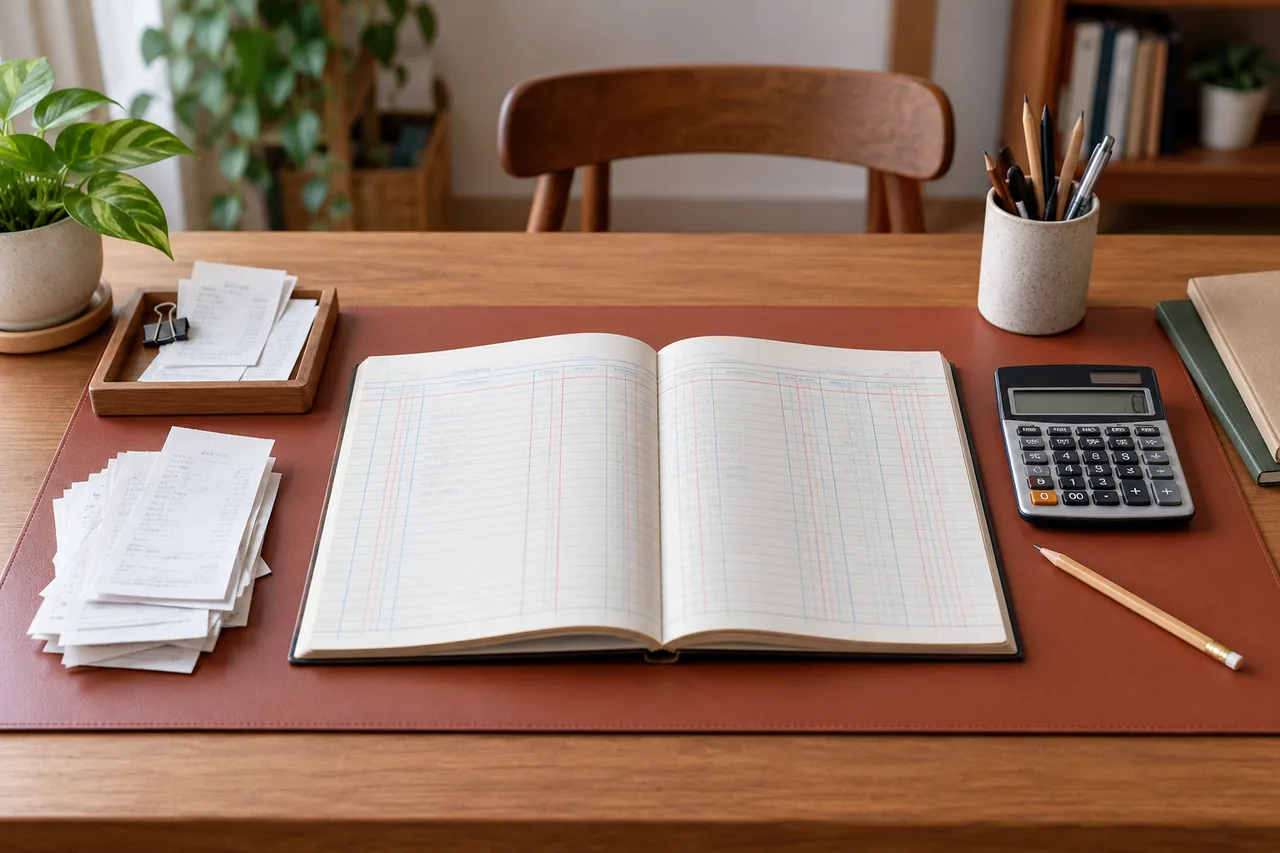
The cash book records cash and bank receipts and payments and doubles as a ledger account for both. Here is how to write up a two-column cash book.
Step by step
- Set out the columns. Create a debit (receipts) side and a credit (payments) side. Each has a cash column and a bank column.
- Record receipts on the debit side. Enter money coming in, such as cash sales, receipts from customers and money banked, on the debit side in the right column.
- Record payments on the credit side. Enter money going out, such as payments to suppliers, expenses and cash withdrawn, on the credit side.
- Handle contra entries. When cash is paid into the bank, record it on both sides (a contra entry) so the money is not double-counted.
- Balance the columns. Balance the cash and bank columns separately to find the closing balances.
Worked example
Cash sales of RM500 go on the debit side in the cash column. Paying a supplier RM300 by cheque goes on the credit side in the bank column.
Understanding the method
A business keeps money in two places: cash in hand and money at the bank. Each is a separate asset. A two-column cash book records both side by side, with a cash column and a bank column on both the debit (receipts) and credit (payments) sides.
The cash book is also part of the ledger itself. That is why you do not open a separate cash account or bank account. The cash book is those accounts.
The rules are the same as for any asset. Money received increases an asset, so it is a debit. Money paid out decreases it, so it is a credit.
When RM500 is banked, cash falls and bank rises. You credit the cash column and debit the bank column with the same figure. This is a contra entry.
For each line in a question, decide two things. Did money come in or go out? Was it cash or bank?
A customer who settles by cheque goes on the debit side in the bank column. Wages paid in notes and coins go on the credit side in the cash column.
Here is an example. The month starts with RM300 cash and RM4,200 at the bank.
The business receives RM900 cash from a customer and banks RM700 of it. It pays a supplier RM1,500 by cheque, draws RM200 from the bank for office use in cash, and pays RM150 cash for stationery.
Cash debit: 300 + 900 + 200 (withdrawal) = RM1,400. Cash credit: 700 (banked) + 150 (stationery) = RM850. Closing cash balance: RM550.
Bank debit: 4,200 + 700 (banked) = RM4,900. Bank credit: 1,500 (cheque) + 200 (withdrawal) = RM1,700. Closing bank balance: RM3,200.
Two checks help. The cash column can never be a credit balance, because you cannot pay out more cash than you hold.
The bank column can be a credit balance, which means an overdraft. Also, every contra entry should appear twice with equal figures, once on each side.
Common mistakes: treating a cheque received as cash, and recording only one half of a contra. Others are leaving out the opening balances (they are debit entries) and mixing up the sides. Keep it simple: money in on the left, money out on the right.
If contra entries or the cash and bank columns keep tripping you up, we can help. One of our teachers can write up a cash book with you from scratch and check each line. Book a trial class
Related skills
The methods here are standard accounting practice, with original figures. For your exam board's exact requirements, see exam boards and Sources.
Practise this skill with a teacher
A teacher can watch you attempt the method and correct it as you go. One-to-one and online, from RM75/hr.
One-hour paid trial · Same-day reply